



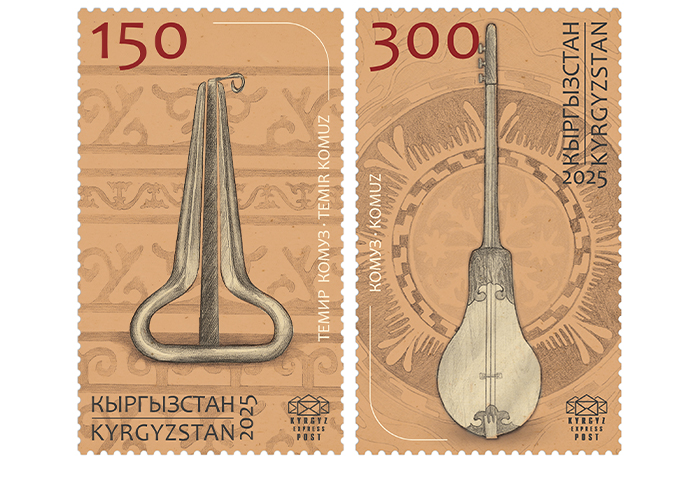
Kyrgyz Musical Instruments
Newsletter no. 118.pdf
On December 29, 2025 the Ministry of Digital Development and
Innovative Technologies of the Kyrgyz Republic puts into circulation a series of Kyrgyz Express Post postage
stamps: "Kyrgyz Musical Instruments".
Music has always held a special place in the culture of Kyrgyzstan.
It accompanied the Kyrgyz people through all stages of life – from military campaigns and welcoming guests
to festive celebrations and memorial rituals. Musical instruments carried the memory of generations, helping
to preserve history, legends and the national epic "Manas". Today, traditional melodies are heard not only
in folklore ensembles but also on modern stages, and some instruments are gaining new popularity in
ethno-jazz and experimental music.
Kyrgyz musical culture has ancient roots and is richly represented
by folk instruments, each of which reflects the character and soul of the nation. The new issue of KEP
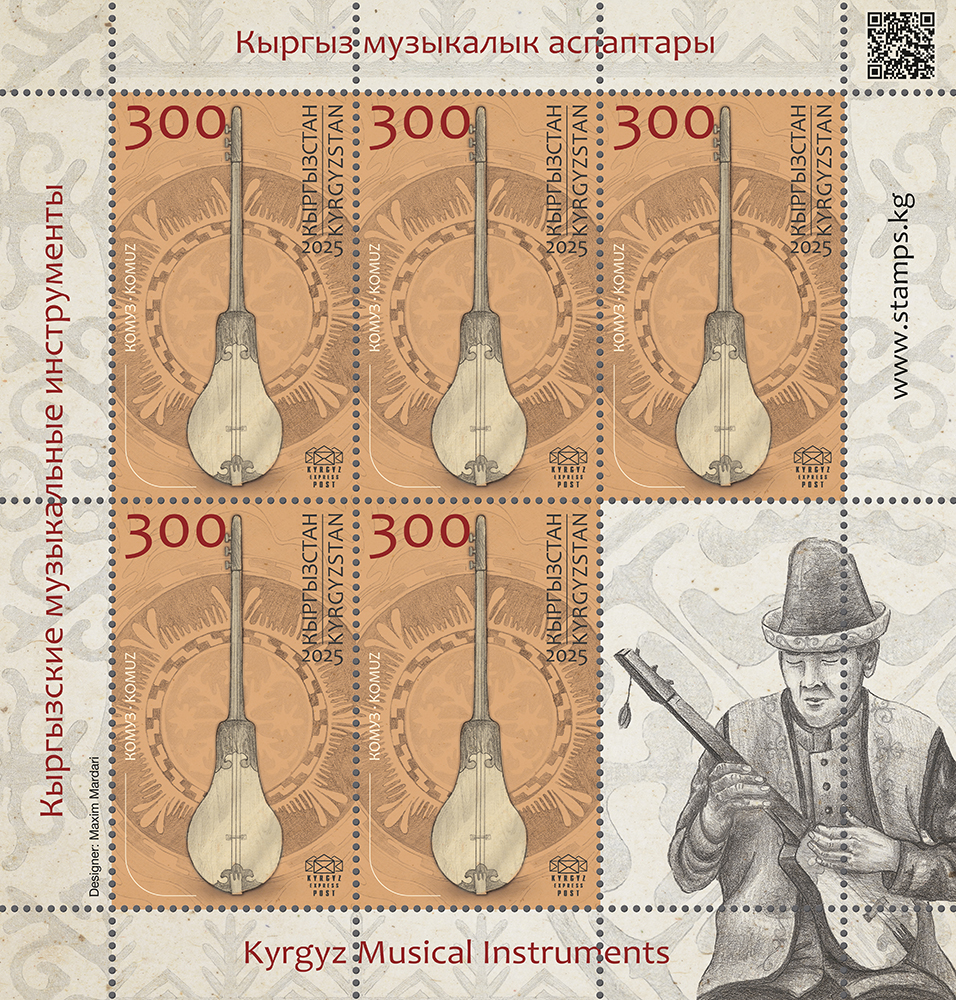
stamps features two characteristic Kyrgyz musical instruments – the temir komuz and the komuz. The coupons
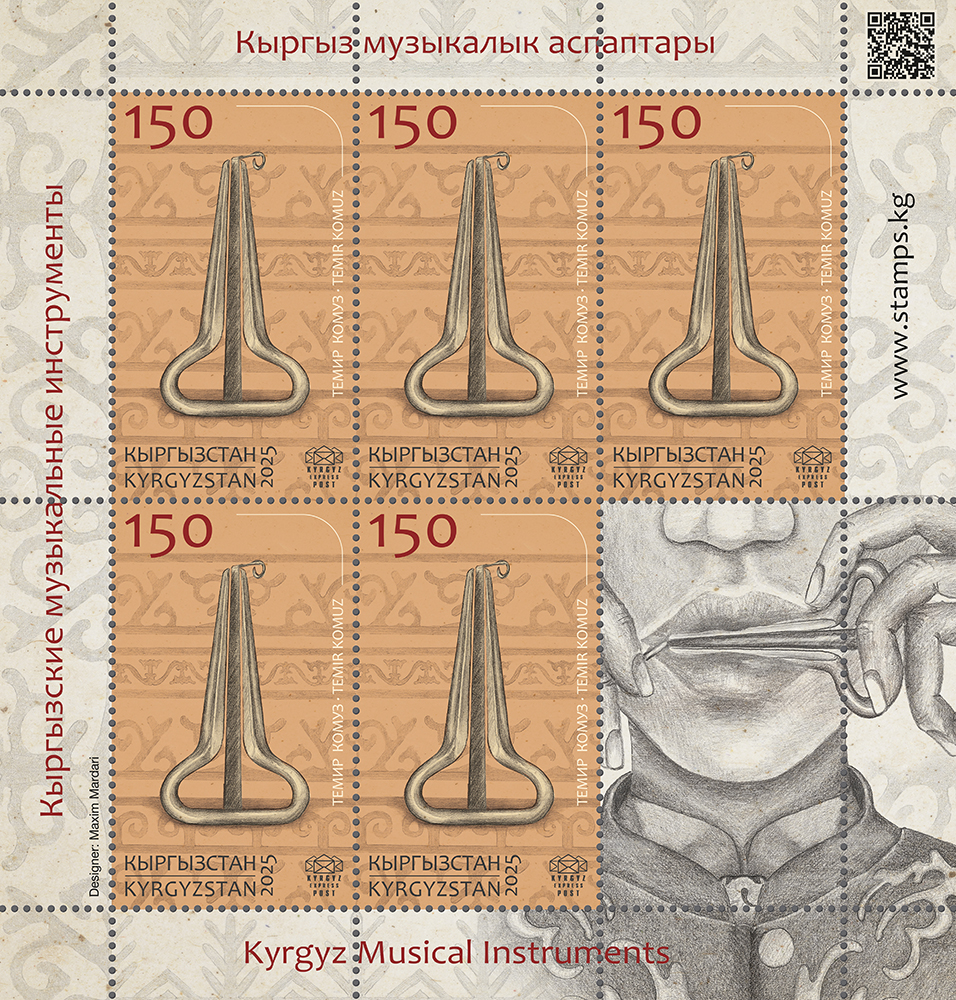
of the miniature sheets depict folk performers, the First Day Cover presents another Kyrgyz musical
instrument – the Kyl kyiak.
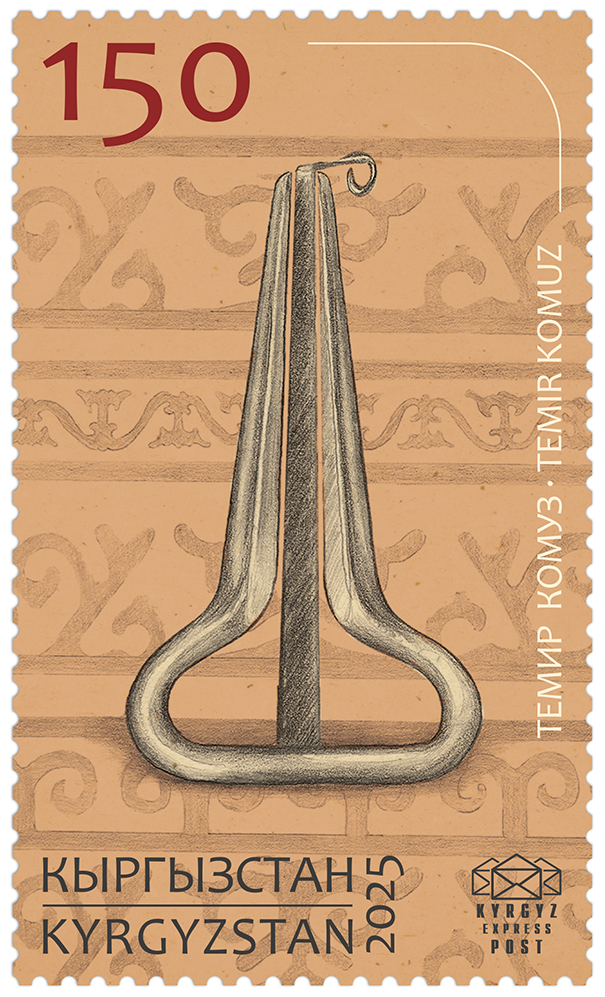
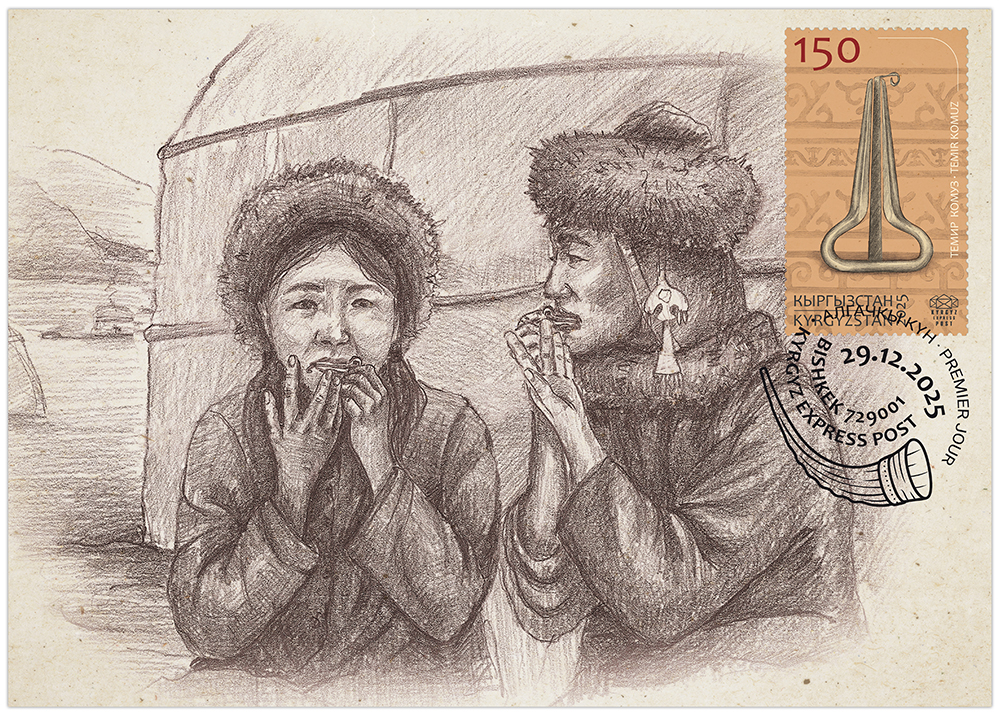
The Temir komuz is one of the most ancient Kyrgyz
plucked lamellophones, a type of jaw harp. It is made of metal and produces unique, vibrating sounds created
by the oscillation of the tongue within the performer’s mouth. Small in size, the temir komuz traditionally
accompanied epic tales, folk songs, and improvisations, conveying mood and rhythm through breath and
movement. Today, it is also used in contemporary music projects, connecting ancient traditions with new
forms of art.
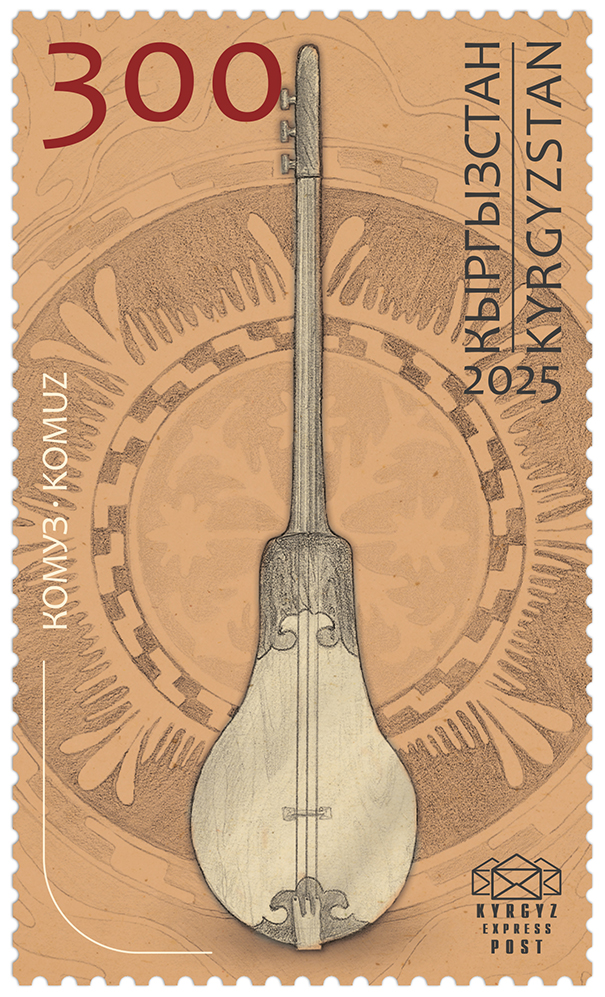
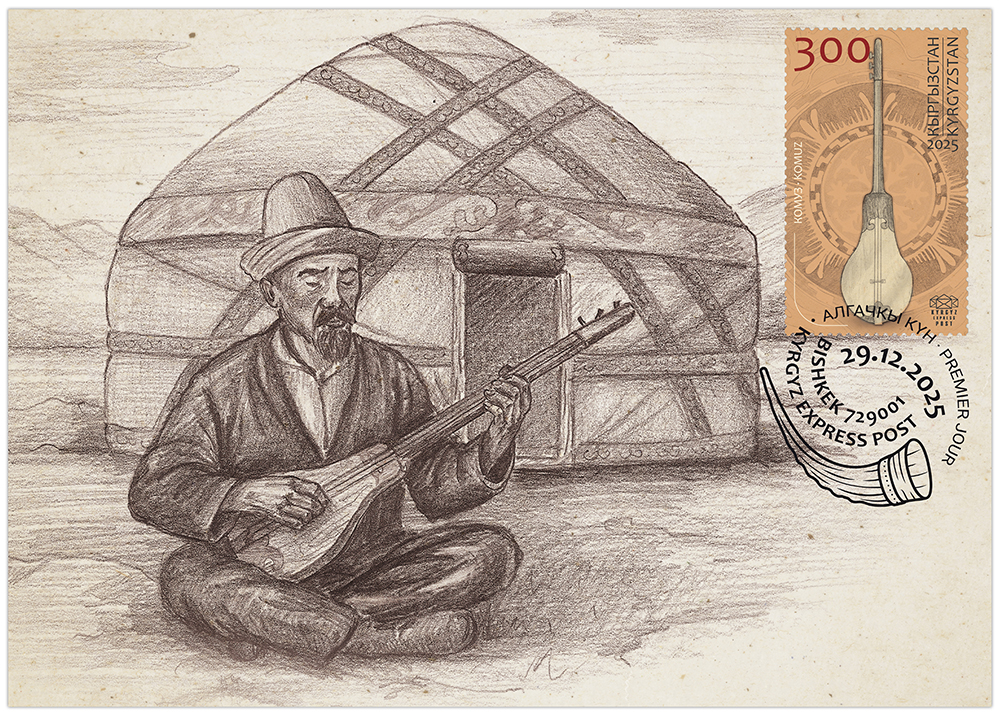
The Komuz is a symbol of Kyrgyz musical tradition
and spiritual heritage. This three-stringed plucked instrument is carved from a single piece of wood, most
often apricot or walnut. The komuz produces a melodic and expressive sound, used to perform folk melodies,
dances and to accompany the "Manas" epic. Modern musicians continue to experiment with the komuz,
incorporating it into compositions of various genres – from classical music to ethno-rock – while preserving
its cultural essence.
All three instruments are an integral part of Kyrgyzstan’s cultural
identity. They embody the harmony of nature, the rhythm of life and the creative inspiration of the people,
bridging the past and the present through the language of music.
For this series, KEP also issues two postcards, which are used to
realize two maximum cards.
Stamps description
No. 266. 150 KGS. Temir komuzNo. 267. 300 KGS. Komuz
Technical specifications
Paper: coated, gummed, 105 g/m².
Printing method: full-color offset lithography.
Stamps perforation: comb 14½:14.
Stamps size: 27.5 × 46 mm.
Stamps are issued in minisheets of 5 stamps
with one label.
Minisheets size: 108 × 113 mm.
Quantity issued: 5 000 pieces each stamp (1 000 minisheets each).
Artist: Maxim Mardari.
Designer: Daria Maier.
Printer House: "Nova Imprim" (Chișinău, Moldova).
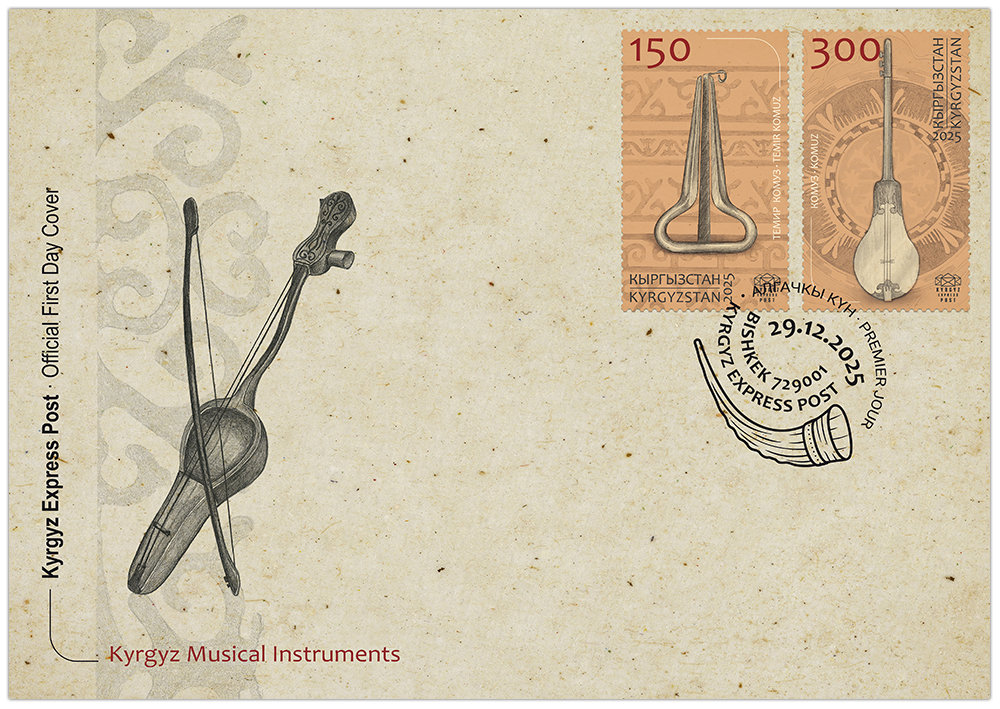
A special cancellation on FDC will be carried out at the Bishkek KEP Office (729001) on the stamps issuing day.
The first day cover, postcards and special
postmark are designed by Daria Maier.
Cover size: С6 (162 × 114 mm).
Quantity of covers and postcards issued: 300 pieces each.
Endorsing ink color: black.
Stamps, maximum cards and FDCs can be purchased here.