




The Anniversaries of Great Personalities
Newsletter no. 117.pdf
On December 29, 2025 the Ministry of Digital Development and
Innovative Technologies of the Kyrgyz Republic puts into circulation a series of Kyrgyz Express Post postage
stamps: "The Anniversaries of Great Personalities".
The year 2025 marks anniversaries of some outstanding personalities
who made invaluable contributions to the development of world civilization, in particular: the 1075th death
anniversary of Al-Farabi, the 550th birth anniversary of Michelangelo Buonarroti, the 200th birth
anniversary of Johann Strauss II and the 150th death anniversary of Hans Christian Andersen. These
anniversaries are commemorated by the new issue of Kyrgyz Express Post, which includes four postage
stamps.
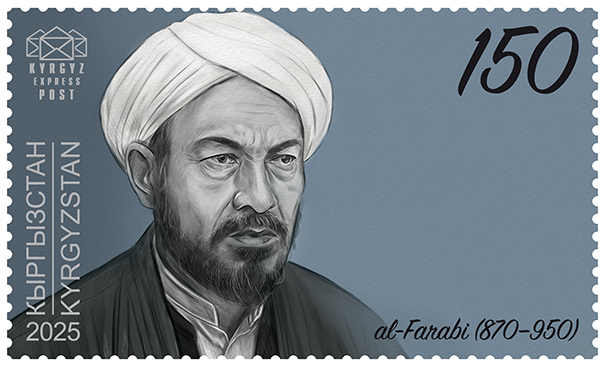
Abu Nasr Muhammad al-Farabi (c. 872–950) was an outstanding
philosopher, scientist, music theorist, and the most prominent representative of the medieval Islamic Golden
Age. He was born on the territory of modern-day Kazakhstan, studied and worked in Samarkand, Bukhara,
Baghdad, Damascus, and Aleppo. Al-Farabi made an immense contribution to the development of philosophy,
logic, physics, mathematics, ethics, and music. He was known in the Middle Ages as the "Second Teacher"
after Aristotle, who was called the "First Teacher".
Al-Farabi's works had a great influence on the subsequent
development of science and philosophical thought in the East and Europe. His ideas of humanism and the
pursuit of harmony between reason and virtue remain relevant today. The name of this great thinker is
especially revered in the countries of Central Asia, including Kyrgyzstan.
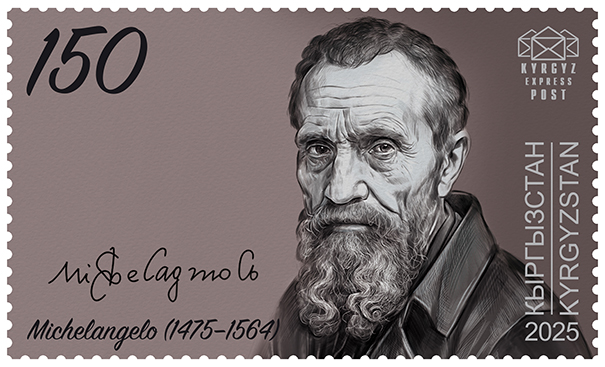
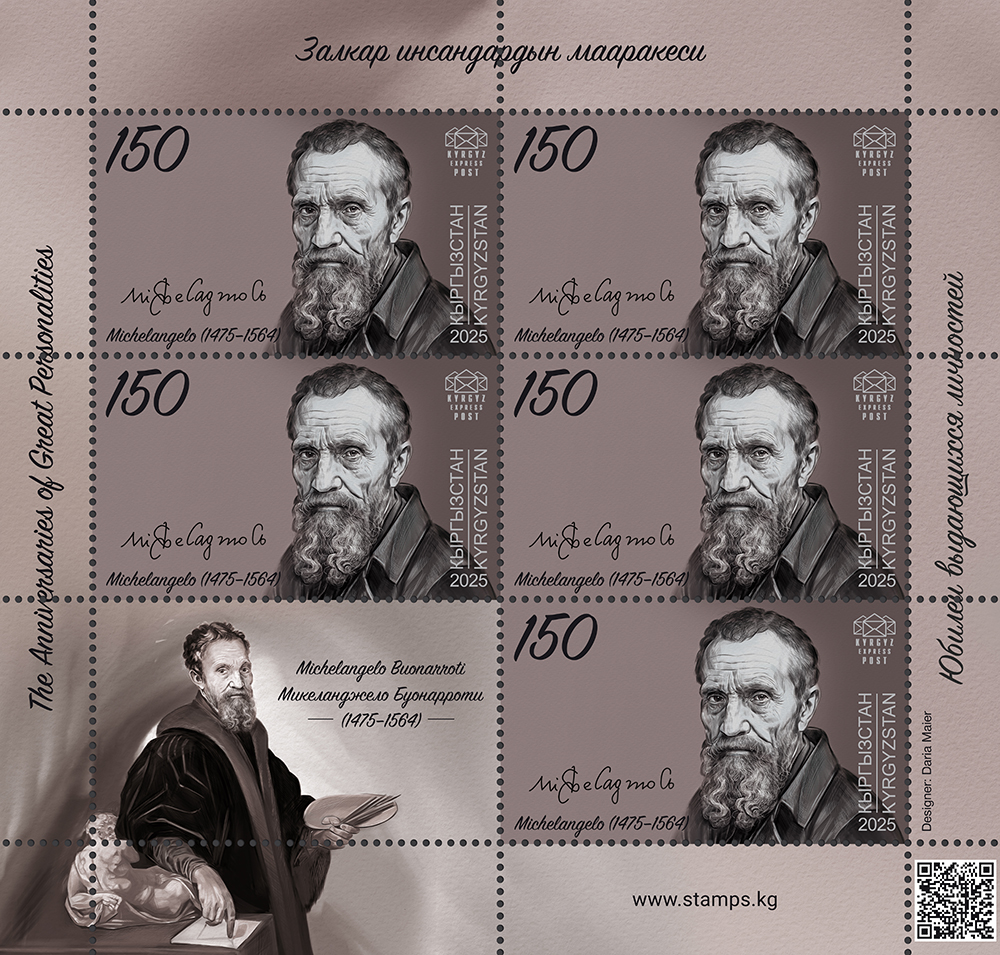
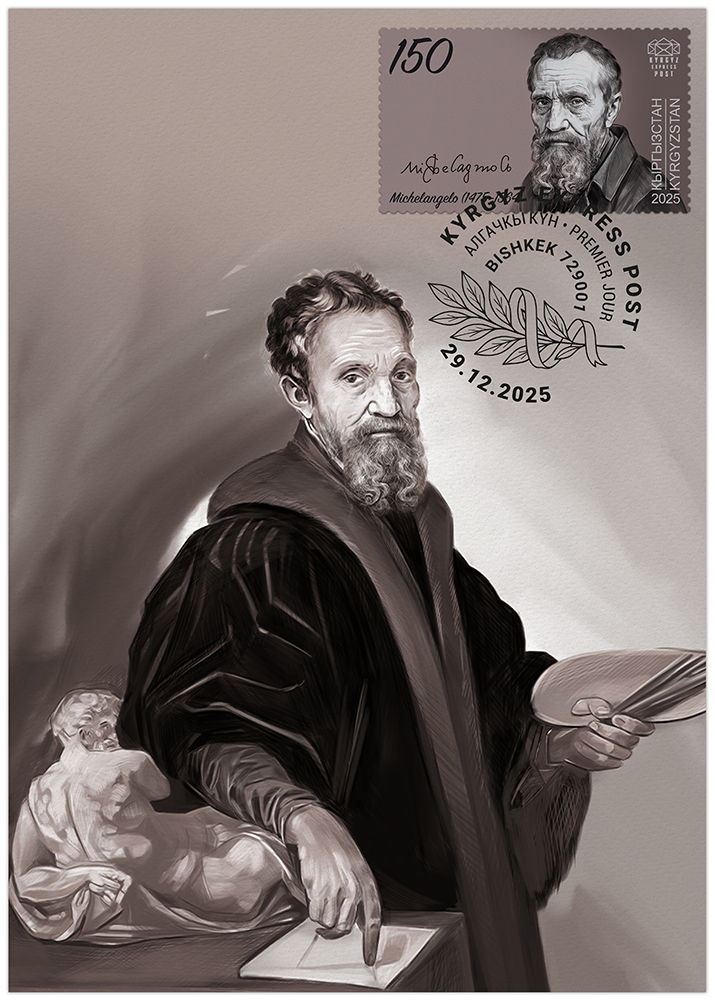
Michelangelo Buonarroti (1475–1564) was a great Italian
sculptor,
painter, architect, poet and thinker of the High Renaissance and early Baroque eras. He was a native of the
Florentine Republic, and it was in his works that the artistic style of the Florentine school reached its
culmination. Michelangelo is the author of some of the greatest masterpieces of world culture, including the
statues David and Pietà, the frescoes of the Sistine Chapel in the Vatican, and the architecture of St.
Peter’s Basilica in Rome.
In his works, Michelangelo embodied ideals of harmony, strength,
and spiritual beauty, becoming a symbol of creative genius and the relentless pursuit of perfection. His art
had a profound influence on the development of European art and continues to inspire artists and masters all
over the world, including in Kyrgyzstan.
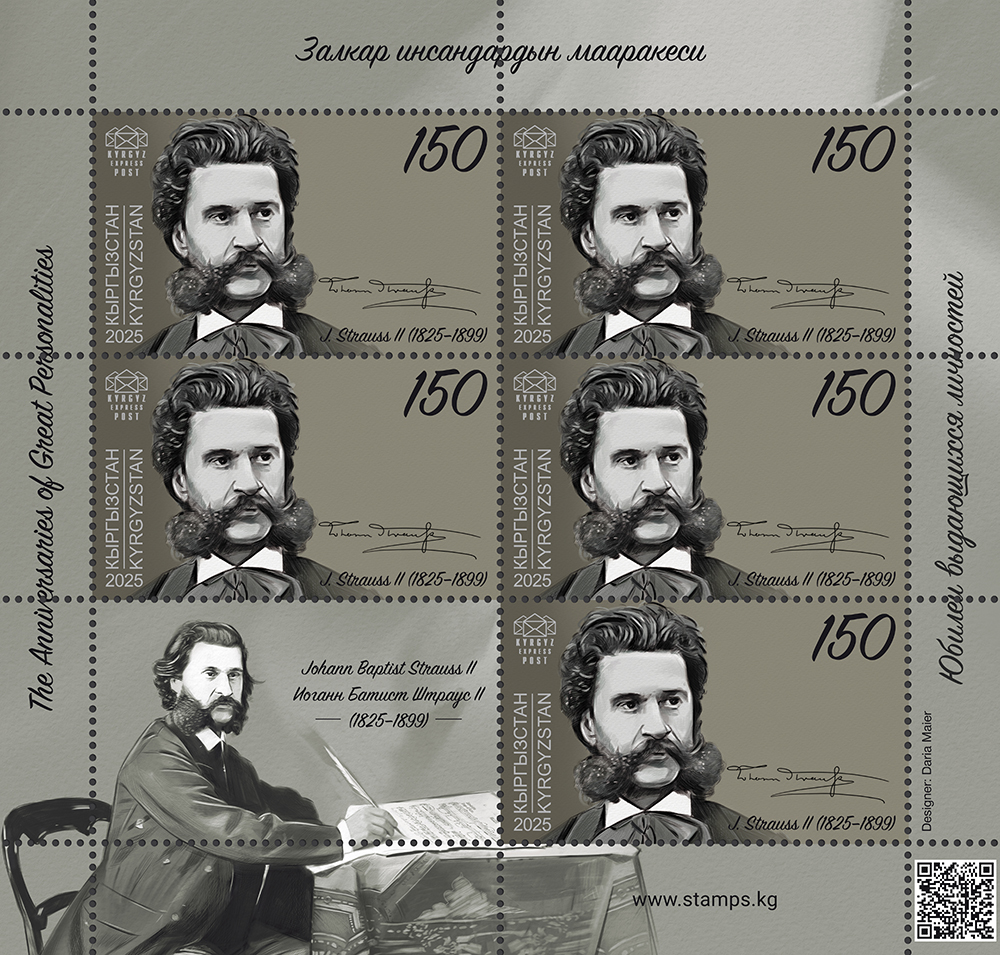
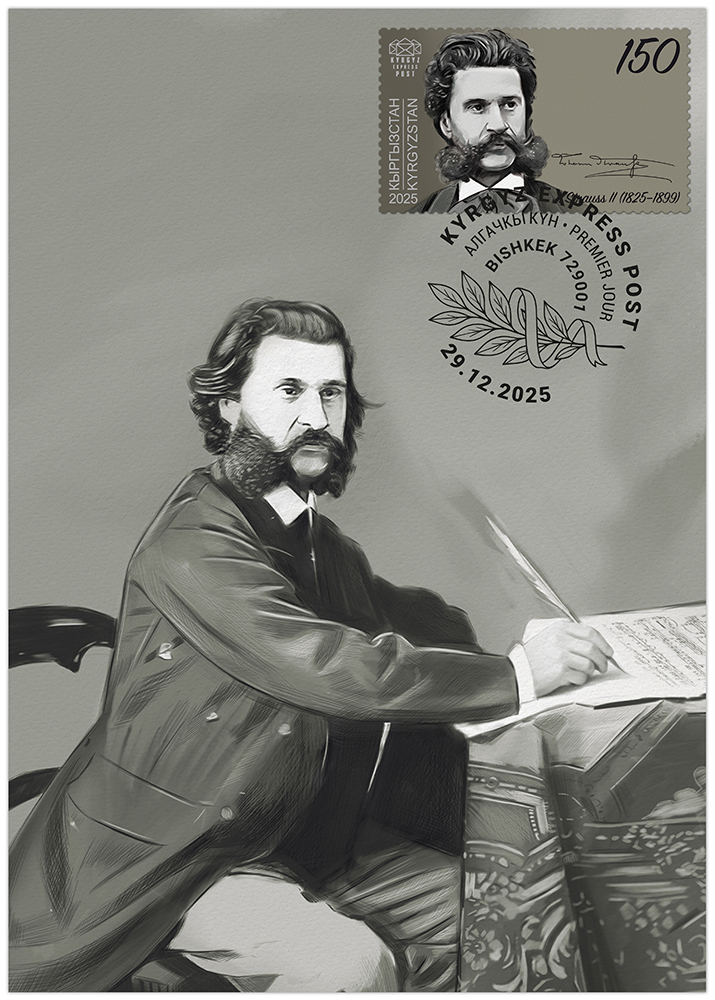
Johann Baptist Strauss II (1825–1899) was a brilliant
Austrian
composer, conductor and violinist, who gained worldwide fame as the "Waltz King". He authored about 500
musical compositions, including the famous waltzes "The Blue Danube", "Tales from the Vienna Woods",
"Artist's Life", as well as the operettas "Die Fledermaus" and "The Gypsy Baron". With his compositions,
Strauss elevated dance music to symphonic heights. His works were admired by many great composers, including
Offenbach, Wagner, Lehár and Tchaikovsky.
Strauss II's music is characterized by brilliance, grace and the
joy of life, embodying the spirit of 19th-century Vienna. His compositions continue to be performed on the
world’s finest stages and are widely appreciated by classical music lovers in Kyrgyzstan.
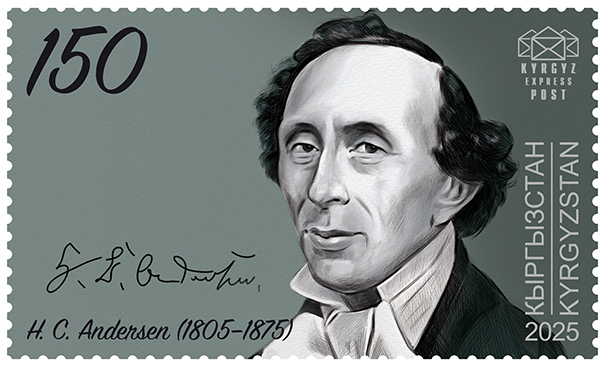
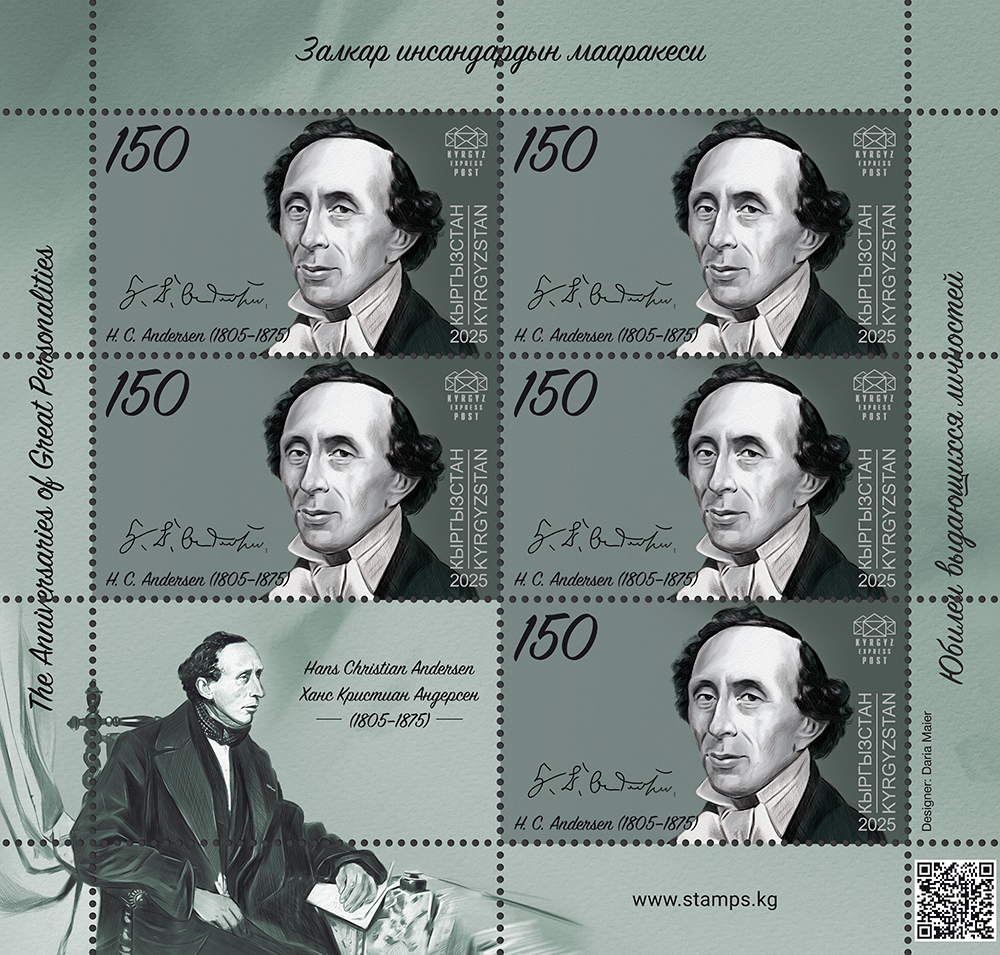
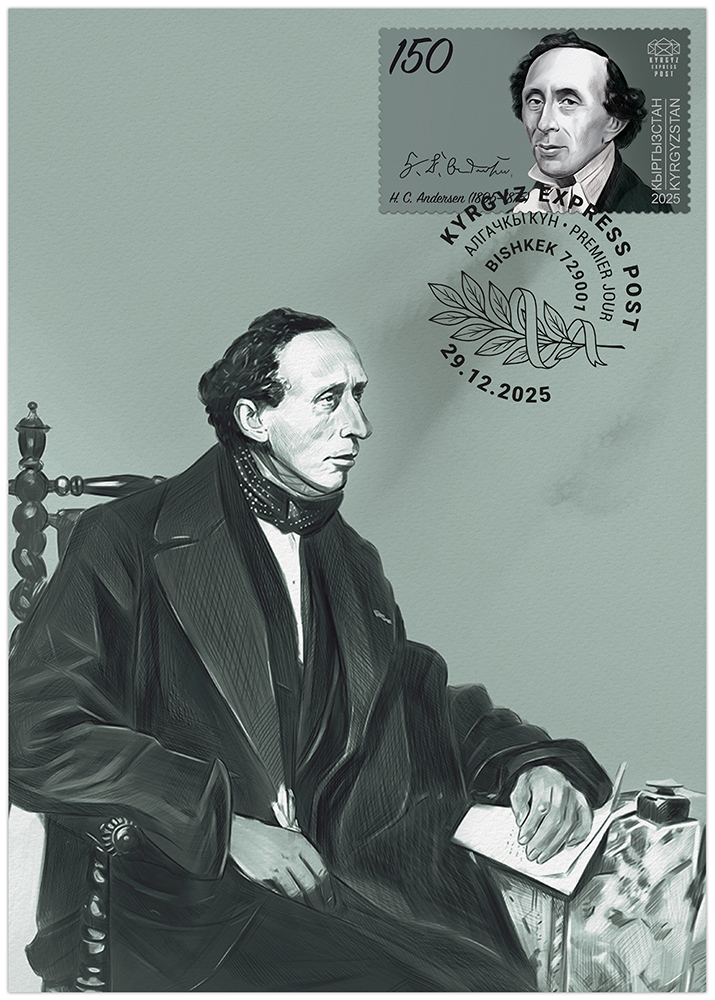
Hans Christian Andersen (1805–1875) was an outstanding
Danish
writer, poet and playwright, one of the most famous authors of fairy-tale literature for children and
adults. His works, including "The Ugly Duckling", "The Snow Queen", "The Little Mermaid", "The Emperor’s New
Clothes", "The Steadfast Tin Soldier", "The Princess and the Pea", "Thumbelina" and "The
Wild Swans", have become part of the world’s cultural heritage.
Andersen skillfully combined folk wisdom with deep humanism and
faith in goodness. His fairy tales have been translated into hundreds of languages and are beloved by
children and adults around the world, including Kyrgyzstan. The memory of the great storyteller lives on in
books, theatrical performances and screen adaptations. April 2, the writer's birthday, is celebrated
worldwide as International Children's Book Day. In 1956, the International Board on Books for Young People
(IBBY) under UNESCO established the Hans Christian Andersen Award (“Andersen Medal”) as a literary prize
awarded to outstanding children's book authors.
For this series, KEP also issues four postcards, which are used to
realize four maximum cards.

Stamps description
No. 262. 150 KGS. Abu Nasr Muhammad al-Farabi (c. 872–950)No. 263. 150 KGS. Michelangelo Buonarroti (1475–1564)
No. 264. 150 KGS. Johann Baptist Strauss II (1825–1899)
No. 265. 150 KGS. Hans Christian Andersen (1805–1875)
Technical specifications
Paper: coated, gummed, 105 g/m².Printing method: full-color offset lithography.
Stamps perforation: comb 14:14½.
Stamps size: 46.00 × 27.50 mm.
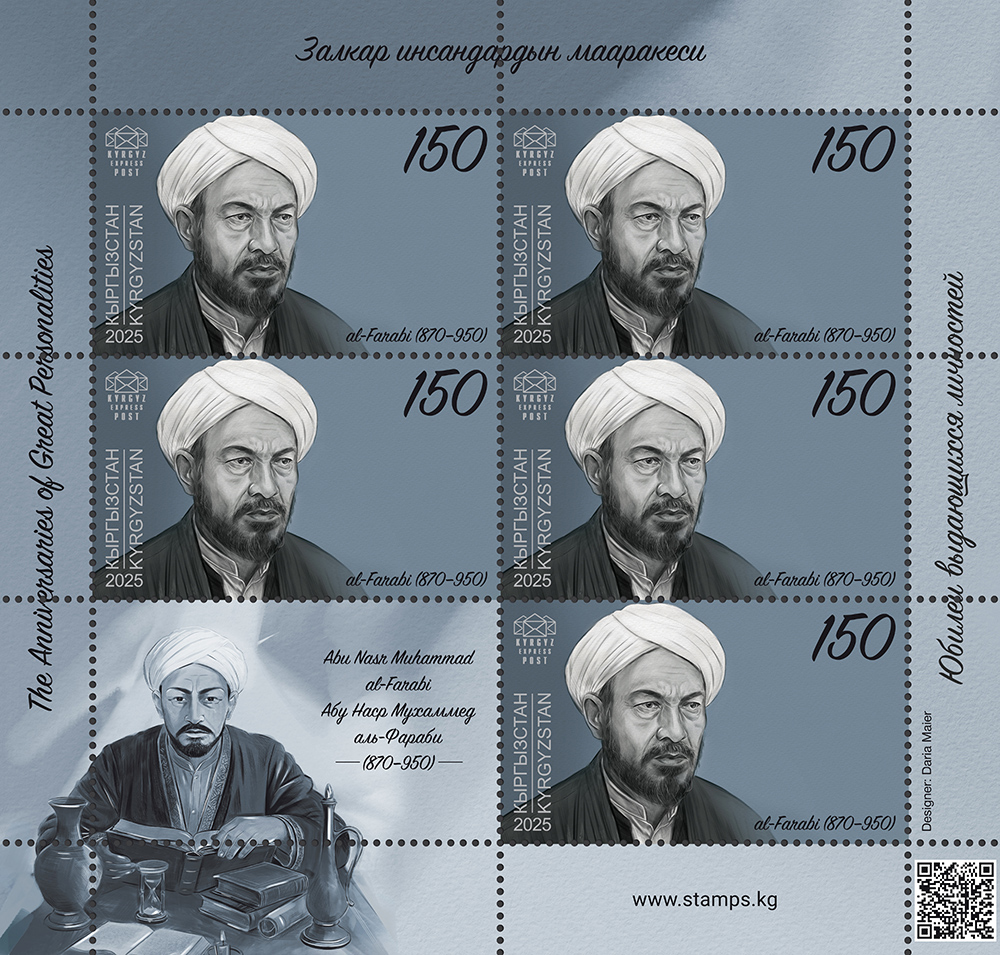
Stamps are issued in minisheets of 5 stamps with one label.
Minisheets size: 113 × 108 mm.
Quantity issued: 6 000 pieces each stamp (1 200 minisheets).
Designer: Daria Maier.
Printer House: "Nova Imprim" (Chișinău, Moldova).
A special cancellation on FDC will be carried out at the Bishkek KEP Office (729001) on the stamps issuing day.
The first day cover, maximum cards and special postmarks are designed by Daria Maier.
Covers size: С6 (162 х 114 mm).
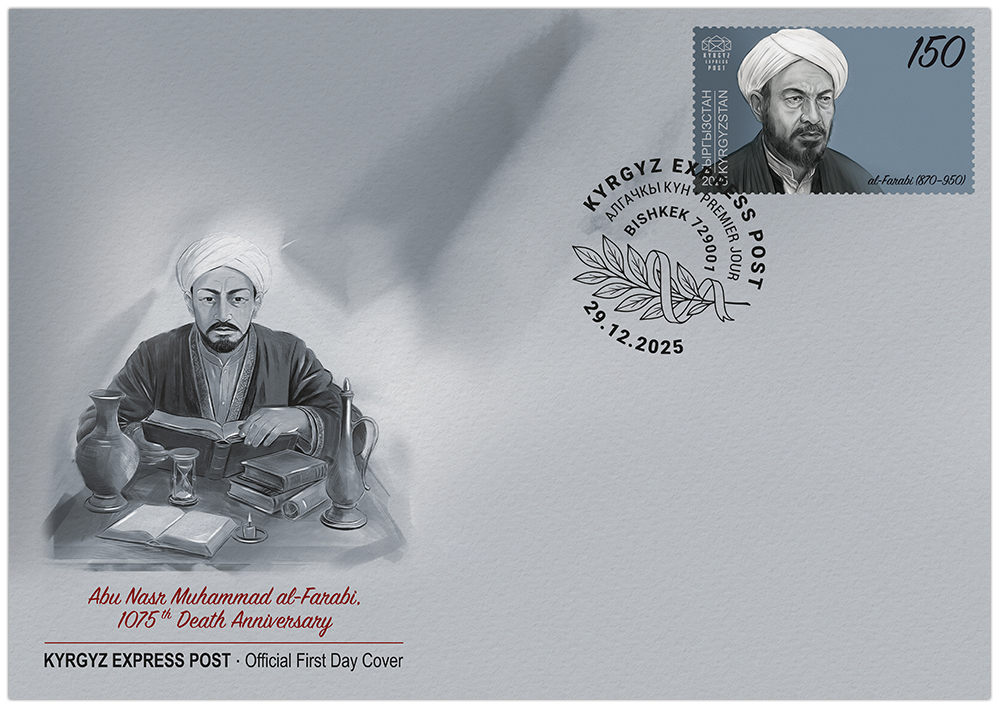
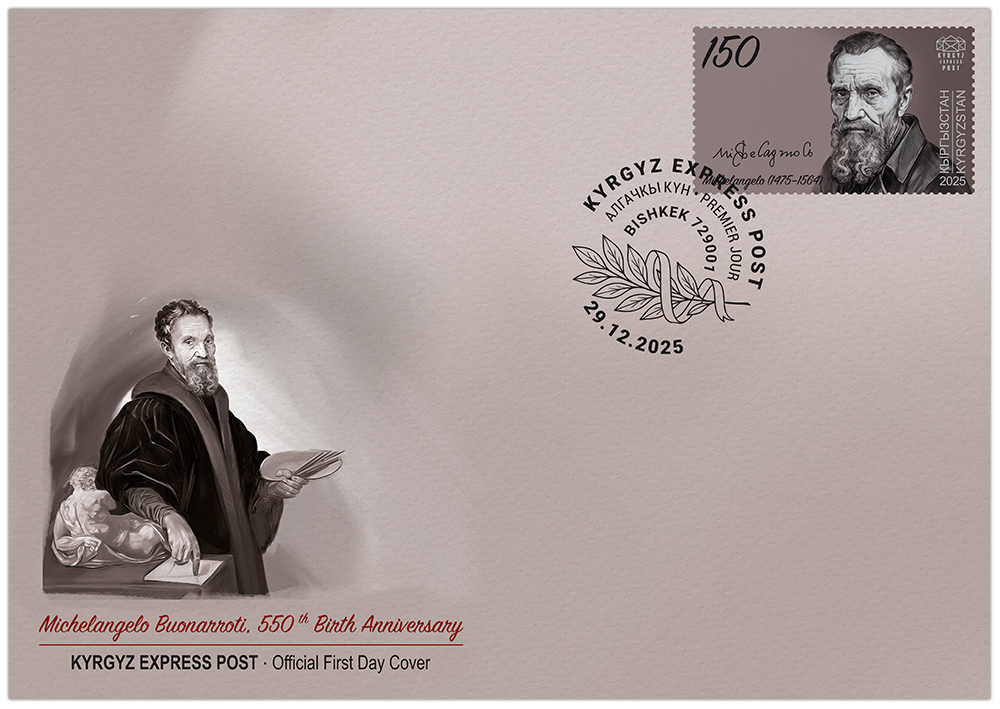
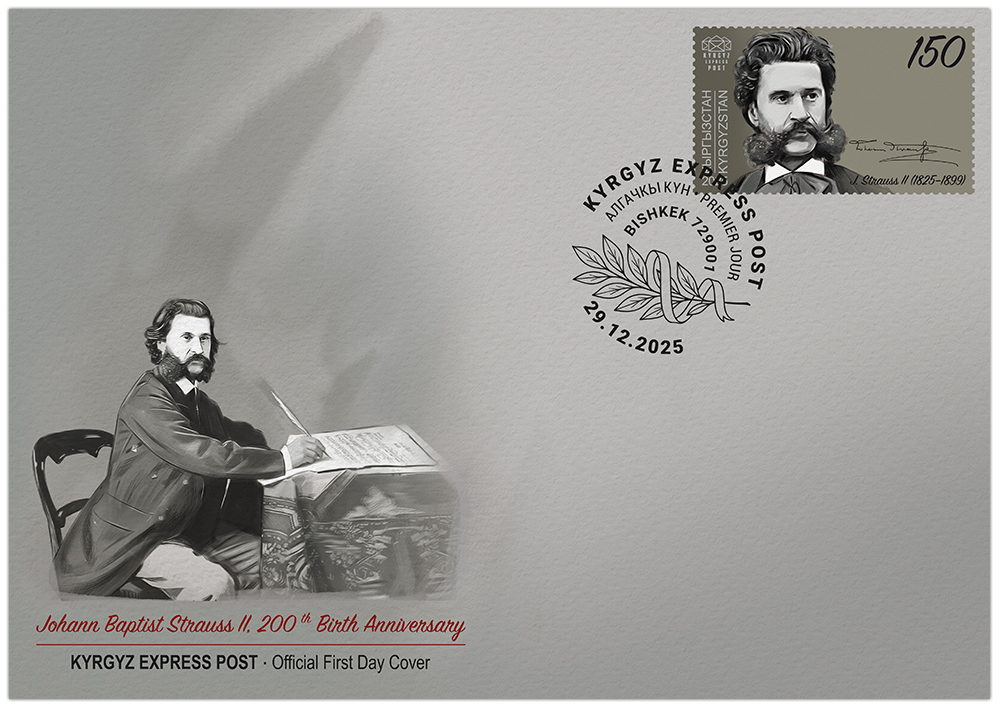
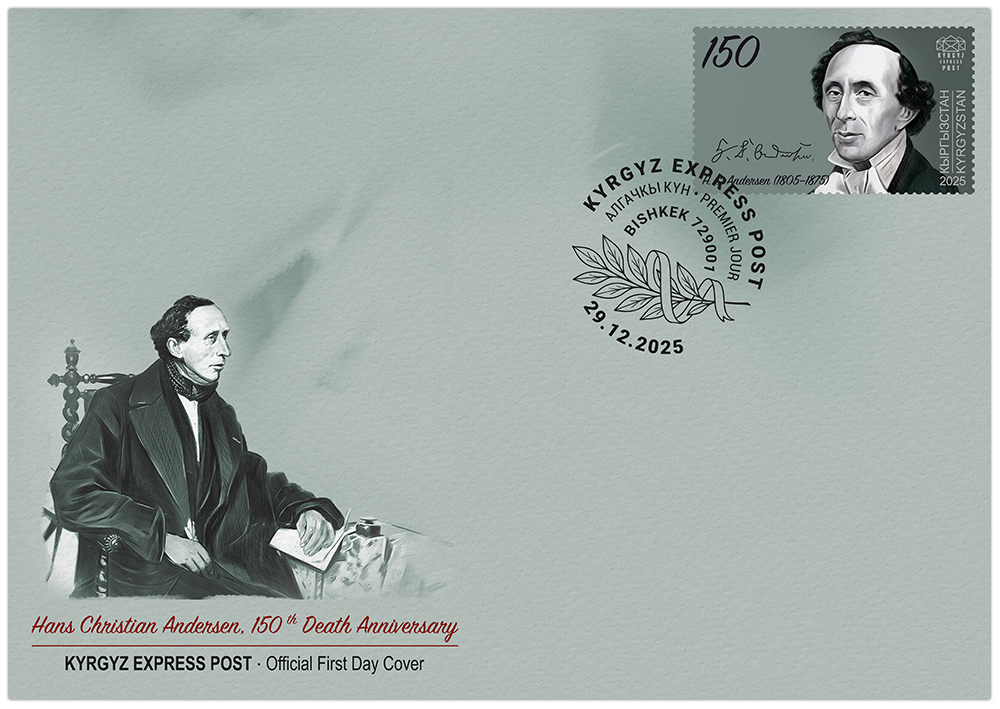
Quantity of covers issued: 300 pieces each.
Quantity of postcards issued: 400 pieces each.
Endorsing ink color: black.
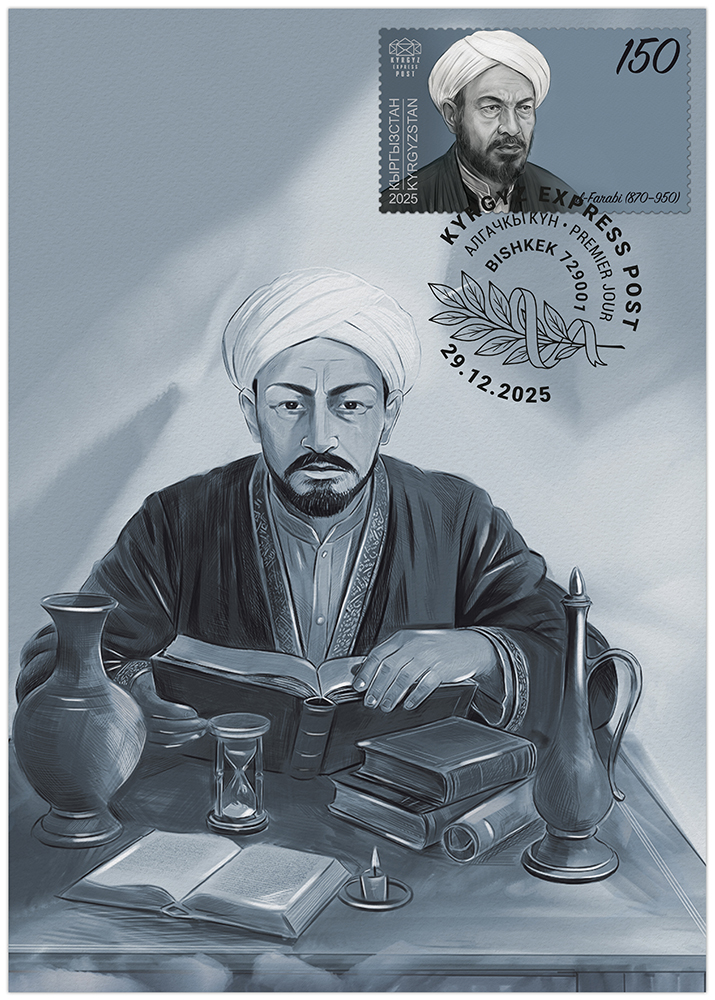
Stamps, maximum cards and FDCs can be purchased here.