



Taste Kyrgyzstan! Batken apricot
Newsletter no. 123.pdf
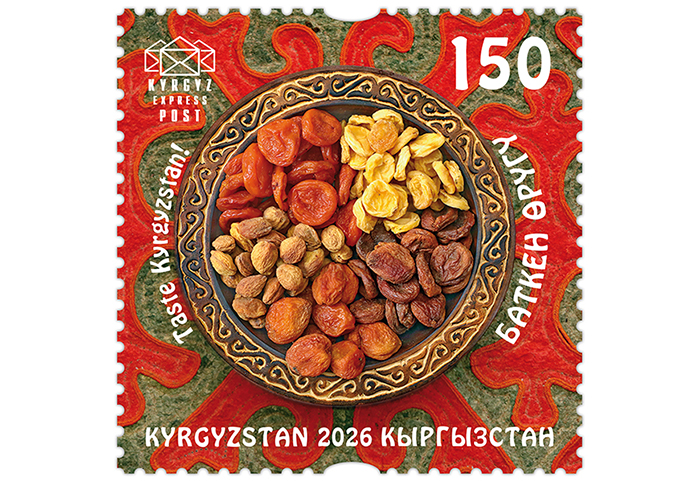
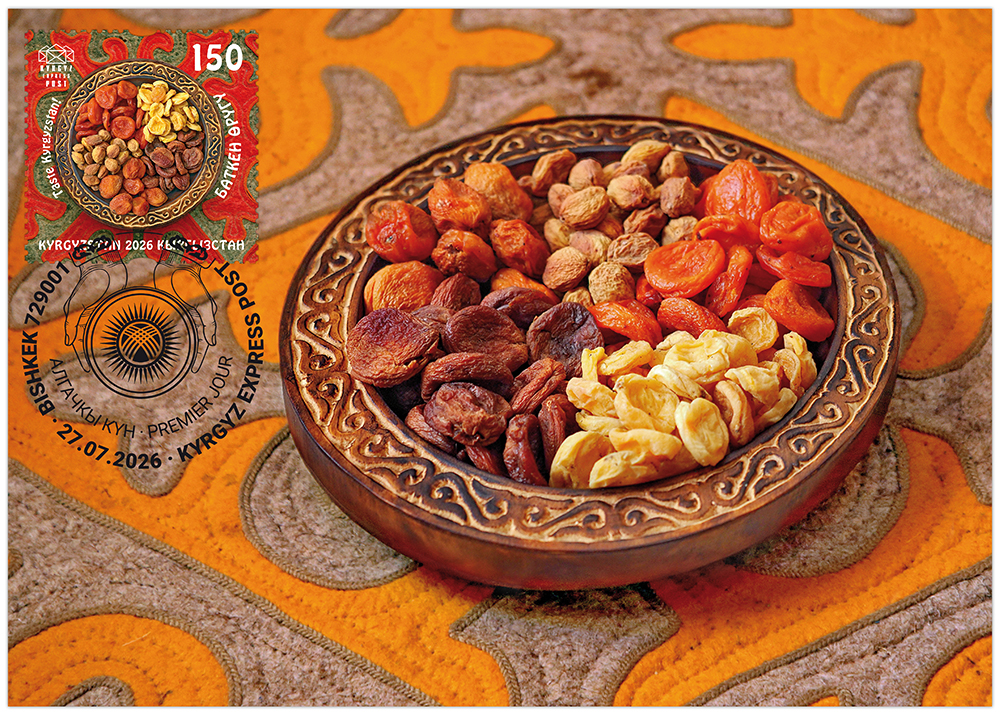
On July 27, 2026 the Ministry of Digital Development and Innovative Technologies of the Kyrgyz Republic puts into circulation a Kyrgyz Express Post postage stamp: "Taste Kyrgyzstan! Batken Apricot".
In Kyrgyzstan, only one species of apricot grows in the wild and is cultivated – the Common apricot (Armeniaca vulgaris). The Batken Region, located in the south-west of Kyrgyzstan, is one of the oldest centers in the world of domestication of the Common apricot. It is here that one can see a diversity of cultivated forms of apricot and distinctive varieties of dried fruits.
A brief note on terminology: a dried apricot with the pit is called uryuk; without the pit – kaysá; and kuraga refers to dried apricot halves (that is, kuraga is kaysa split into two halves). The most well-known traditional varieties of dried apricots are Kandak, Subkhan, and Isfarek.
Batken apricots are distinguished by high sweetness, juiciness, and a distinctive "sun-infused" flavor due to the hot climate. The harvest is collected in June – July, and many of the fruits are immediately processed into kuraga, uryuk, and kaysa. Batken apricots are considered a "superfood" due to their high concentration of potassium, vitamins, and organic acids, which are preserved even during natural drying. Consumption of this product supports the functioning of the heart and blood vessels, improves digestion and metabolism, contributes to the health of the eyes and skin, and strengthens the nervous system.
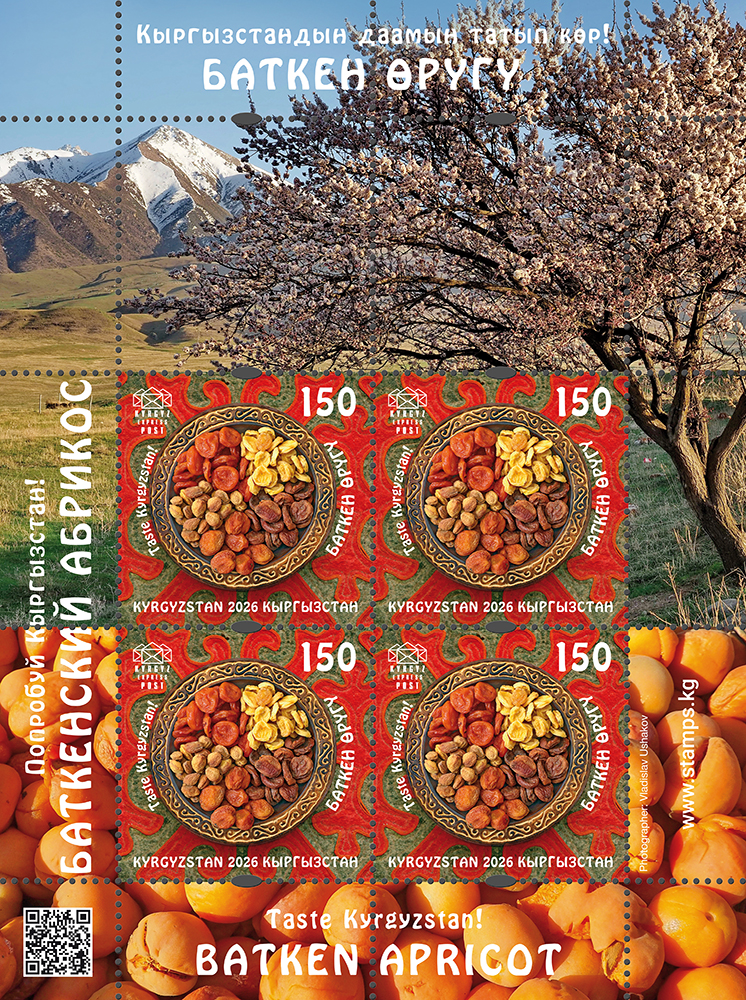
The KEP stamp features two varieties of uryuk and three varieties of kaysa on a traditional Kyrgyz dish. The labels of the minisheet depict a blossoming apricot tree (photo taken by Vladislav Ushakov in the foothills of the Kyrgyz Range). The design of the FDC shows how dried apricots are sold in markets in Bishkek.
High-quality Batken apricots constitute an export commodity of Kyrgyzstan, being supplied to Turkey, Russia, Kazakhstan, Uzbekistan, and other countries worldwide. Batken apricots are rightfully considered the "gold" of southern Kyrgyzstan. There is even a monument in honor of this remarkable fruit in the city of Batken.
KEP expresses hope that this postage stamp issue will contribute to the worldwide popularization of Kyrgyzstan’s culinary heritage, in particular the remarkable Batken apricot. We invite you to try it. Enjoy your meal!
A postcard for the production of a maximum card is also issued for this KEP stamp.
Stamp description
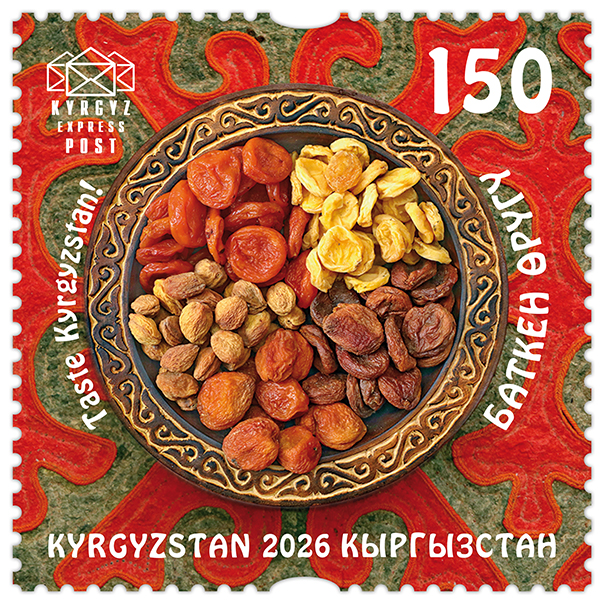
No. 275. 150 KGS. Batken apricot
Technical specifications
Paper: coated, gummed, 105 g/m².
Printing method: full-color offset lithography.
Stamp perforation: comb 13 syncopated.
Stamp size: 34 × 34 mm.
Stamp is issued in minisheets of 4 stamps with two labels.
Minisheet size: 100 × 134 mm.
Quantity issued: 6 000 stamps.
Photographer: Vladislav Ushakov.
Designer: Daria Maier.
Printer House: "Nova Imprim" (Chișinău, Moldova).
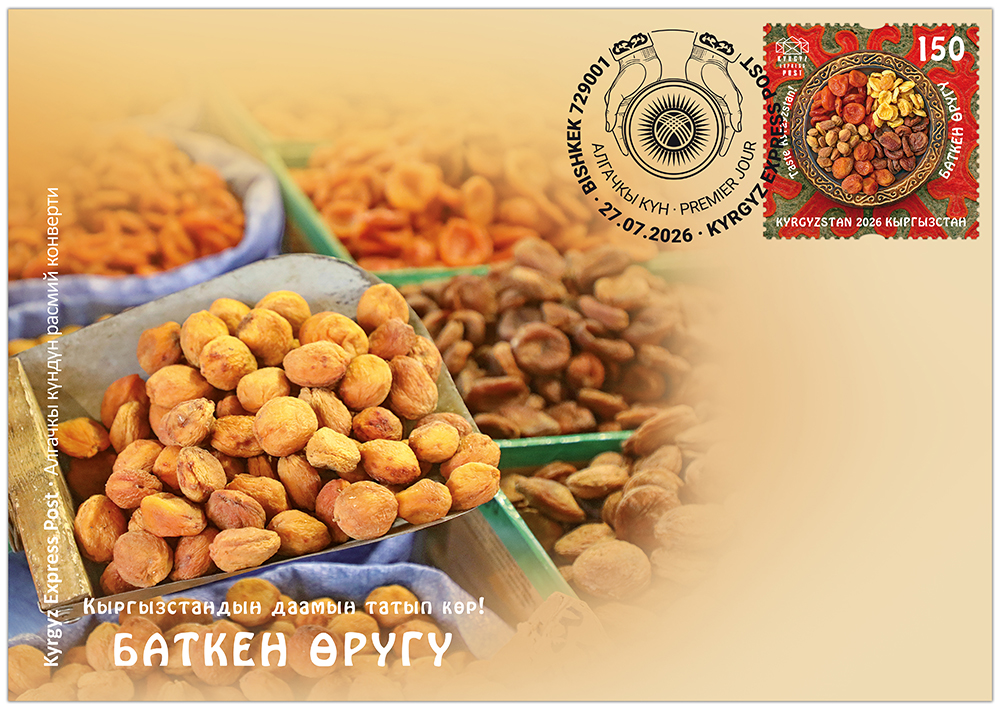
A special cancellation on FDC will be carried out at the Bishkek KEP Office (729001) on the stamp issuing day.
The first day cover, postcard and special postmark
are designed by Daria Maier. The first day cover, postcard and special postmark are designed by Daria Maier.
Cover size: С6 (162 × 114 mm).
Quantity of covers and postcards issued: 300 pieces each.
Endorsing ink color: black.
Stamps, maximum cards and FDCs can be purchased here.